Subscribe For Weekly New Recipes!

James Martin Pear Tarte Tatin
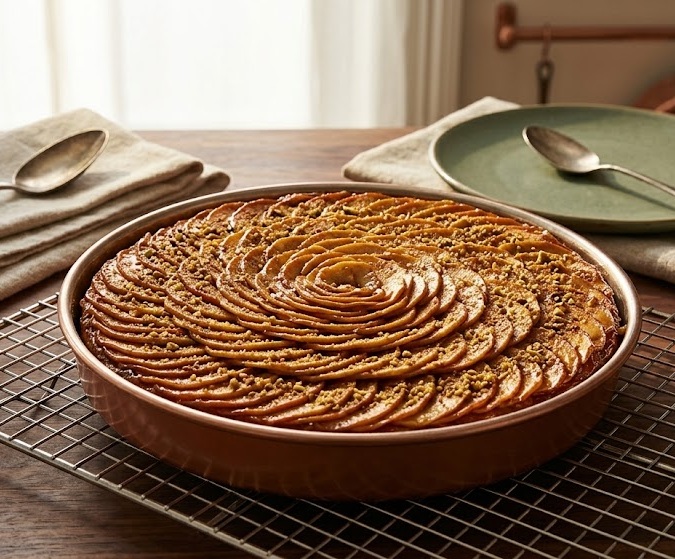
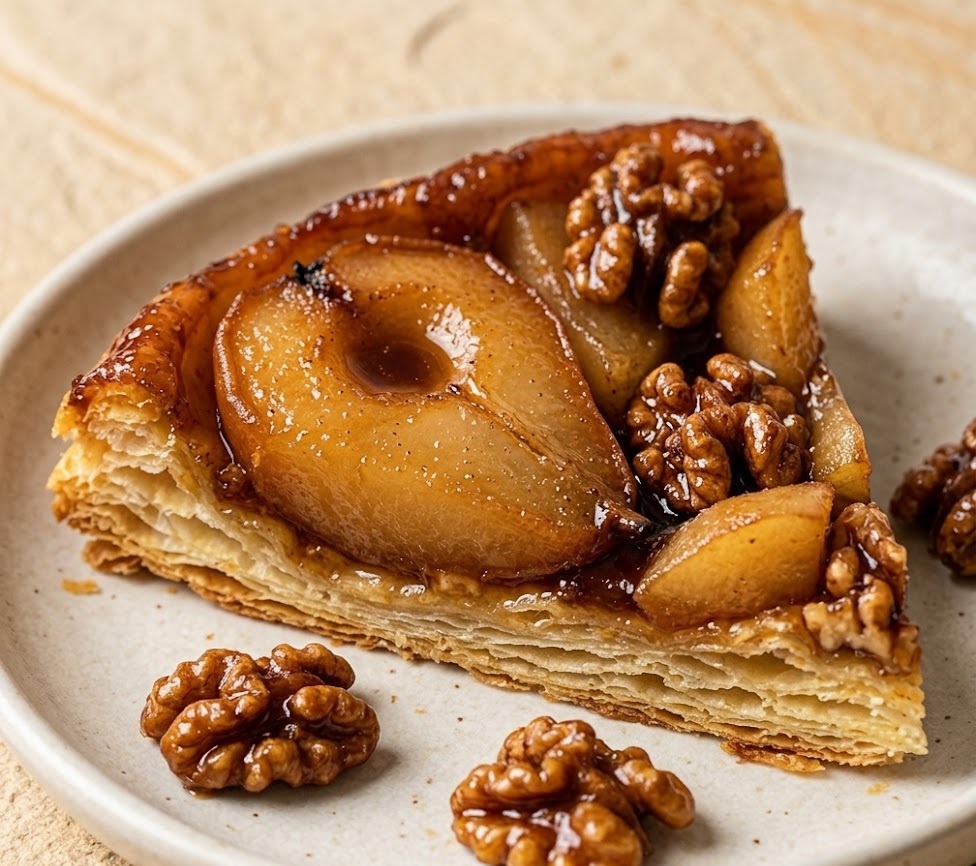
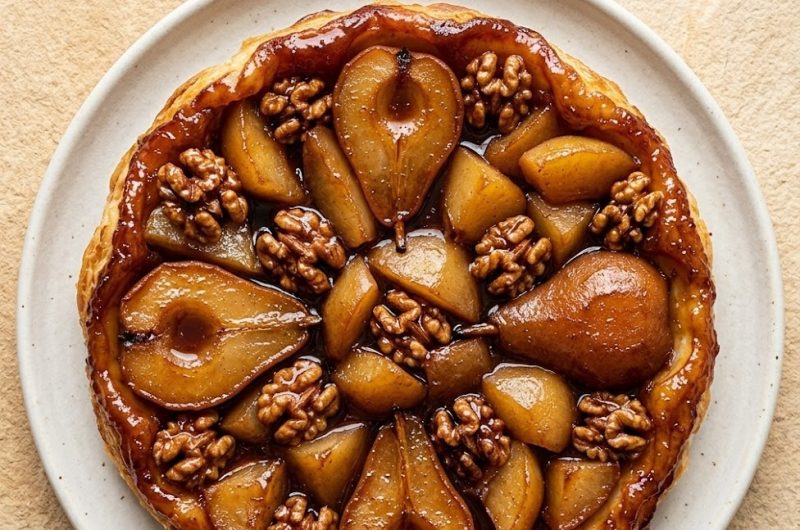
This James Martin pear tarte Tatin is a classic French upside-down tart made with buttery caramel, tender pears, and crisp puff pastry. The pears turn soft and fragrant as they bake, while the pastry stays golden and flaky, soaking up just enough caramel to taste rich but not heavy. It is very achievable for home bakers, even if caramel feels a little intimidating at first. Total time is about 1 hour 10 minutes, including a short rest before the all-important flip.
Ingredients
For the pears
- 6 firm ripe pears (about 900g), peeled, halved and cored
- 1 tbsp lemon juice
For the caramel
- 200g caster sugar
- 80g unsalted butter, diced
- 1 tsp vanilla extract (optional)
- Pinch of fine sea salt
For the pastry topping
- 1 sheet ready-rolled puff pastry (about 320g)
- 1 tbsp plain flour, for dusting
- 1 egg yolk
- 1 tbsp milk (to mix with the yolk, for glazing)
How to Make James Martin Pear Tarte Tatin
Oven preparation
- Prepare the oven: Preheat the oven to 200°C or 180°C fan. Place a shelf in the middle of the oven so the tart cooks evenly and the pastry colours nicely.
- Choose the right pan: Use a 24cm ovenproof frying pan (no plastic handle) or a tarte Tatin tin. Have a large serving plate ready for flipping later.
Prep the pears
- Peel and core: Peel the pears, slice them in half lengthways, and scoop out the cores. Try to keep the halves neat so they sit snugly in the pan.
- Prevent browning: Toss the pear halves with the lemon juice and set aside while you make the caramel.
Make the caramel (on the hob)
- Warm the sugar: Sprinkle the caster sugar evenly over the base of your pan and place it over medium heat. Leave it to melt, then gently swirl the pan as it liquefies so it colours evenly.
- Watch the colour: Once the caramel turns a deep amber (think copper penny), take the pan off the heat for a moment so it does not tip into burnt.
- Add the butter: Carefully add the diced butter and stir with a wooden spoon until smooth. Add the vanilla (if using) and a pinch of salt.
Arrange and coat the pears
- Pack them in: Arrange the pear halves cut-side up in the caramel, starting around the edge and working inward. They should be snug because they shrink slightly as they cook.
- Briefly cook to glaze: Put the pan back over low heat for 2 to 3 minutes to coat the pears and help them start to soften. Spoon a little caramel over the top, then take the pan off the heat.
Top with pastry and bake
- Cut the pastry: Lightly dust the worktop with flour. Lay the puff pastry out and cut a circle about 2cm wider than your pan.
- Cover and tuck: Lay the pastry over the pears. Tuck the edges down inside the pan with a spoon, creating a little rim so the caramel stays contained.
- Glaze and vent: Mix the egg yolk with the milk and brush over the pastry. Prick the pastry a few times with a fork to let steam escape.
- Bake: Bake for 25 to 30 minutes, until the pastry is puffed and deep golden. If your oven runs cool, give it an extra 5 minutes for a properly crisp top.
Cooling and assembling (the flip)
- Rest before turning out: Remove the pan from the oven and let the tart stand for 10 minutes. This helps the caramel thicken slightly so it releases more cleanly.
- Loosen the edges: Run a palette knife carefully around the inside edge of the pan, just to make sure nothing is stuck.
- Flip with confidence: Place your serving plate over the pan. Holding both firmly (use oven gloves), invert in one smooth motion. Lift the pan away slowly.
- Fix any gaps: If a pear half shifts, simply nudge it back into place while the caramel is warm.
Tips
How do I stop the tarte Tatin from sticking to the pan?
Do not skip the 10-minute rest after baking. Turning it out straight away can make the caramel run and grab. If you are worried, you can also warm the pan over very low heat for 15 to 20 seconds before flipping to loosen the caramel.
What pears are best for pear tarte Tatin?
Go for firm ripe pears that hold their shape, like Conference, Comice, or Bosc. If they are overly soft, they can collapse into the caramel and you lose that lovely defined fruit pattern.
Why did my caramel go grainy or seize?
This usually happens when the sugar crystallises or the butter cools the caramel too quickly. Keep the heat moderate, avoid stirring while the sugar first melts (swirl the pan instead), and once you add the butter, stir gently over low heat until it turns silky again.
How do I keep the pastry crisp?
Bake until the pastry is a deep golden colour, not pale blonde. Also, pricking the pastry helps steam escape so it puffs without getting soggy. If your kitchen is warm, chill the pastry circle in the fridge for 10 minutes before topping the pears.
Serving Suggestions
- Warm with vanilla ice cream and an extra pinch of sea salt
- With lightly whipped cream or crème fraîche for a tangy contrast
- With toasted flaked almonds scattered over for crunch
- Alongside an espresso or strong black tea
Storage
Room Temperature
Keep the tart loosely covered at room temperature for up to 1 day. It is best eaten the day it is made, when the pastry is at its crispiest.
Refrigerator
Store in an airtight container in the fridge for up to 3 days. Reheat in a 180°C (160°C fan) oven for 10 to 15 minutes to re-crisp the pastry. The microwave will warm it, but the pastry will soften.
Freezing
You can freeze pear tarte Tatin, but the pastry will lose some crunch. Freeze slices on a tray until firm, then wrap well and freeze for up to 2 months. Thaw overnight in the fridge and reheat in the oven until hot.
Nutrition
- Calories: 420 kcal
- Carbohydrates: 58 g
- Protein: 4 g
- Fat: 20 g
- Saturated Fat: 9 g
- Sodium: 220 mg
Disclaimer: Nutrition values are estimates and will vary depending on the pastry brand, pear size, and portion size.
FAQs
Can I make pear tarte Tatin ahead of time?
Yes. For the best texture, bake it earlier the same day, leave it in the pan, then rewarm in a 180°C (160°C fan) oven for 8 to 10 minutes and flip just before serving. This keeps the pastry crisper than flipping and chilling it for hours.
Do I have to peel the pears?
Peeling is recommended for the classic smooth, tender finish. If you prefer a more rustic tart you can leave the skins on, but some varieties can turn a little tough after baking.
What can I use instead of puff pastry?
All-butter puff pastry gives the lightest, flakiest result, but you can use shortcrust pastry for a more biscuit-like base. Roll it slightly thinner and bake until deeply golden so it is not doughy.
How do I know when the caramel is the right colour?
Aim for a deep amber, like the colour of a copper coin. Too pale and it tastes overly sweet; too dark and it turns bitter quickly. If in doubt, take it off the heat slightly early because it continues to darken from residual heat.
Why did my tarte Tatin come out watery?
This usually means the pears were very ripe and released lots of juice, or the tart was not baked long enough for the caramel to thicken. Choose firm pears and bake until the pastry is well browned, then rest 10 minutes before flipping so the caramel can settle.
James Martin Pear Tarte Tatin
Course: DessertCuisine: FrenchDifficulty: MediumServings
8
slicesPrep time
20
minutesCooking time
35
minutesTotal time
70
minutesCalories
420
kcal55
minutesA classic pear tarte Tatin with glossy caramel, tender pears, and crisp puff pastry, baked in one pan and flipped to serve warm.
Ingredients
6 firm ripe pears (about 900g), peeled, halved and cored
1 tbsp lemon juice
200g caster sugar
80g unsalted butter, diced
1 tsp vanilla extract (optional)
Pinch of fine sea salt
1 sheet ready-rolled puff pastry (about 320g)
1 tbsp plain flour, for dusting
1 egg yolk
1 tbsp milk, to mix with the yolk for glazing
Directions
- Preheat the oven to 200°C (180°C fan). Use a 24cm ovenproof frying pan or tarte Tatin tin.
- Toss the pear halves with lemon juice and set aside.
- Make a caramel in the pan with sugar, then add butter, vanilla and salt.
- Arrange pears cut-side up in the caramel and cook briefly to coat.
- Top with puff pastry, tuck edges in, glaze, and bake until deep golden.
- Rest 10 minutes, then invert onto a plate. Serve warm.
Notes
- Choose pears that are ripe but still firm so they hold their shape.
- If your caramel looks lumpy after adding butter, keep the heat low and stir gently until it smooths out.
- Resting before flipping helps the caramel settle and reduces the chance of sticking.