
Subscribe For Weekly New Recipes!

James Martin Pork Roast
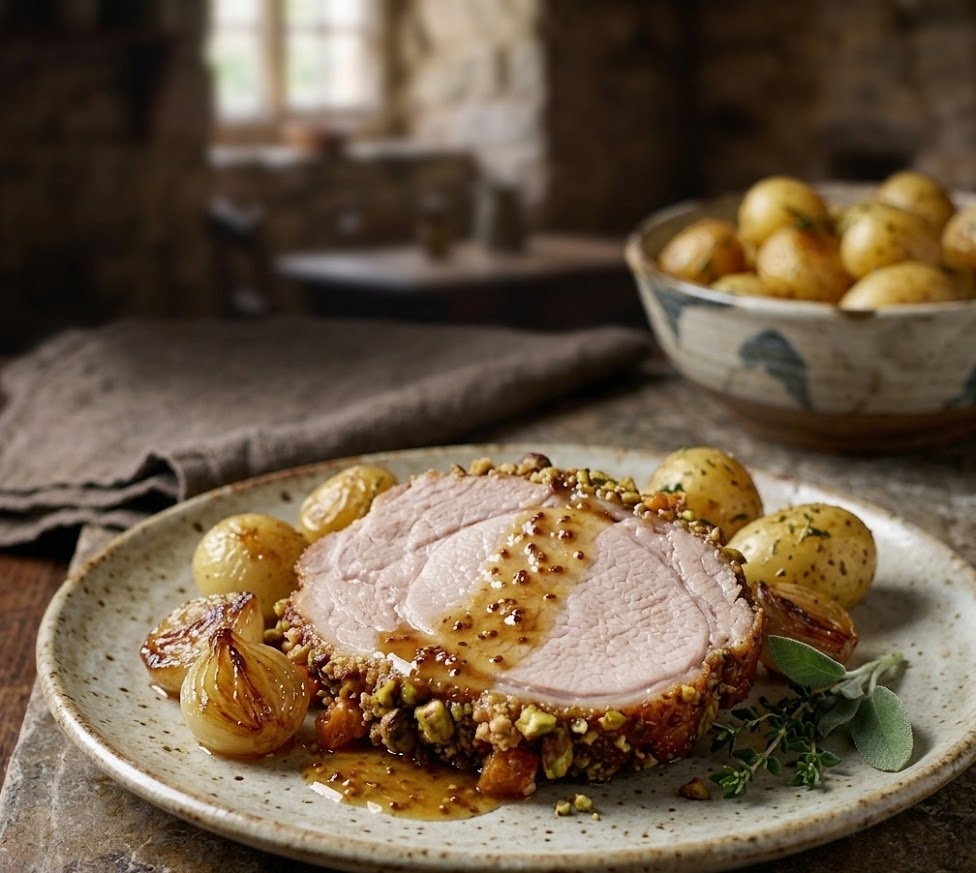
This James Martin pork roast is all about crisp, bubbly crackling and juicy slices of pork, served with proper roast potatoes and a simple cider gravy made right in the tin. The flavour is classic and deeply savoury, with fennel, garlic, and a hint of sweetness from roasted apples and onions. It is very doable for a confident beginner, as long as you follow the heat changes and give the pork time to rest. Total time is about 2 hours 20 minutes, most of which is hands-off roasting.
Ingredients
For the pork and crackling
- 2kg pork loin roast, skin-on (ask your butcher to score, or score it yourself)
- 1 tbsp fine sea salt (for the skin)
- 1 tbsp olive oil
- 2 tsp fennel seeds, lightly crushed
- 2 tsp fresh thyme leaves (or 1 tsp dried thyme)
- 2 garlic cloves, finely grated
- 1 tsp freshly ground black pepper
For the roast potatoes
- 1.2kg Maris Piper potatoes, peeled and cut into large chunks
- 3 tbsp goose fat or dripping (or vegetable oil)
- 1 tsp fine sea salt, plus more to taste
For the apples and onions
- 2 large onions, cut into wedges
- 2 eating apples, cored and cut into wedges
For the cider gravy
- 250ml dry cider
- 350ml hot chicken stock
- 1 tbsp plain flour
- 1 tbsp Dijon mustard (optional)
- 1 tsp apple cider vinegar or lemon juice (optional, to balance)
- 1 tbsp cold unsalted butter (optional, to finish)
- Salt, to taste
How to Make James Martin Pork Roast
- Prepare the oven: Preheat the oven to 240°C or 220°C fan. Put a sturdy roasting tray on the middle shelf while the oven heats so the fat for the potatoes gets properly hot later.
- Dry the skin for better crackling: Pat the pork skin really dry with kitchen paper. If you have time, leave it uncovered in the fridge for 1–4 hours to air-dry, then pat again.
- Season the pork (the “mixing” step): In a small bowl, mix the olive oil, crushed fennel seeds, thyme, grated garlic, and black pepper. Rub this mixture over the meat (not the skin). Rub the skin all over with the sea salt, working it into the scored lines.
- Start the crackling: Sit the pork on a rack set over a roasting tray, or directly in a tray if you do not have a rack. Roast for 25 minutes at 240°C (220°C fan) until the skin begins to blister.
- Reduce the heat and keep roasting: Turn the oven down to 180°C or 160°C fan. Roast for a further 60–70 minutes, depending on thickness, until the pork reaches 63–68°C in the thickest part (avoid the bone or fat).
- Parboil the potatoes: While the pork roasts, boil the potatoes in salted water for 8–10 minutes until the edges are just turning tender. Drain well, then shake the colander to rough up the surface. Leave to steam-dry for 5 minutes.
- Roast the potatoes: Carefully remove the hot tray from the oven and add the goose fat. When it melts, tip in the potatoes and turn to coat. Roast for 50–60 minutes, turning once or twice, until deeply golden and crisp.
- Add the apples and onions: For the final 35–40 minutes of cooking, add the onion and apple wedges to the pork tray (or tuck them around the pork if there is room). They should soften and caramelise in the juices.
- Rest the pork (the “cooling” step): Transfer the pork to a board, loosely cover with foil, and rest for 20–30 minutes. This makes carving easier and keeps the meat juicy. If the crackling softens during resting, you can pop it back in a hot oven for 5 minutes before serving.
- Make the cider gravy: Spoon off excess fat from the roasting tray, leaving the sticky, flavourful bits behind. Place the tray over a low hob (or scrape everything into a saucepan). Whisk in the flour and cook for 1 minute, then gradually whisk in the cider followed by the hot stock. Simmer for 5–10 minutes until glossy. Stir in mustard, vinegar or lemon (if using), then whisk in cold butter to finish. Season to taste.
- Carve and assemble: Remove the crackling in a sheet if you can, then slice the pork. Break the crackling into pieces. Serve with roast potatoes, the roasted apples and onions, and plenty of cider gravy.
Tips
How do I get really crisp crackling?
Dry skin and high heat at the start are the two big levers. Pat the skin dry, salt it well, and begin at 240°C (220°C fan). If your pork has been sitting in packaging liquid, drying it uncovered in the fridge for a few hours helps a lot.
What if the crackling is done but the pork needs longer?
Lift the crackling off in one piece if possible and set it aside. Keep roasting the pork until it reaches temperature, then crisp the crackling back up for 5–10 minutes in a hot oven while the meat rests.
How do I stop roast pork from drying out?
Use a thermometer and rest the meat properly. For pork loin, aim for 63–68°C, then rest 20–30 minutes. Overcooking is the usual reason loin goes dry.
Why are my roast potatoes not crispy?
Make sure the potatoes steam-dry after draining, and the fat is genuinely hot before you add them. Roughing up the edges in the colander creates more surface area to crisp.
Serving Suggestions
- Butter-braised cabbage or simple steamed greens
- Roasted carrots and parsnips with a pinch of cumin
- Wholegrain mustard on the side
- Apple sauce or a sharp chutney
- Extra gravy and a jug of cider at the table
Storage and Reheating
Room temperature
Do not leave cooked pork out for more than 2 hours (1 hour if the room is very warm). Once it has cooled, refrigerate promptly.
Refrigerator
Store leftover pork, potatoes, and apples/onions in airtight containers for up to 3 days. Reheat pork slices gently in gravy (best for keeping it moist), or cover with foil and warm in a 160°C oven until hot.
Freezing
Freeze carved pork (preferably with a little gravy) for up to 2–3 months. Defrost overnight in the fridge, then reheat until piping hot. Crackling does not freeze well, so enjoy that on the day if you can.
Nutrition
- Calories: 680 kcal
- Carbohydrates: 52 g
- Protein: 42 g
- Fat: 34 g
- Saturated Fat: 10 g
- Sodium: 920 mg
Disclaimer: Nutrition values are estimates and will vary depending on the exact cut of pork, fat rendered, and portion sizes.
FAQs
What cut of pork is best for a James Martin-style pork roast?
A skin-on pork loin roast is ideal for neat slices and proper crackling. Pork shoulder also works if you want a richer, more forgiving roast, but it needs longer cooking.
What temperature should roast pork be cooked to in the UK?
For juicy pork, aim for 63–68°C in the thickest part, then rest for 20–30 minutes. This gives you safe, tender meat without drying it out.
Why is my pork crackling not crispy?
The skin is usually too wet or not salted enough. Pat it very dry, salt it well, and start the roast at a high temperature (240°C or 220°C fan) to blister the skin quickly.
Can I make the cider gravy without alcohol?
Yes. Replace the cider with cloudy apple juice or extra stock, then add 1–2 teaspoons of apple cider vinegar or lemon juice to bring back a little brightness.
How long should I rest roast pork before carving?
Rest for 20–30 minutes, loosely covered with foil. Resting lets the juices settle so the pork stays moist and slices cleanly.
Can I prep anything the day before?
Yes. Score the skin, dry the pork uncovered in the fridge overnight (great for crackling), and peel/chunk the potatoes and keep them submerged in cold water in the fridge.

James Martin Pork Roast
Course: Main CourseCuisine: BritishDifficulty: EasyServings
6
peoplePrep time
25
minutesCooking time
1
hour35
minutesTotal time
140
minutesCalories
680
kcal2
hoursCrisp crackling roast pork with golden roast potatoes, roasted apples and onions, and an easy cider gravy made in the roasting tin.
Ingredients
2 kg pork loin roast, skin-on (well scored)
2 tsp fennel seeds, lightly crushed
2 tsp fresh thyme leaves (or 1 tsp dried)
2 garlic cloves, finely grated
1 tbsp olive oil
1 tbsp fine sea salt (for crackling)
1 tsp black pepper
1.2 kg Maris Piper potatoes, peeled and cut into large chunks
3 tbsp goose fat or dripping (or 3 tbsp vegetable oil)
2 large onions, cut into wedges
2 eating apples, cored and cut into wedges
250 ml dry cider
350 ml chicken stock (hot)
1 tbsp plain flour
1 tbsp Dijon mustard (optional)
1 tsp apple cider vinegar or lemon juice (optional, to balance)
1 tbsp cold unsalted butter (optional, to finish gravy)
Extra salt, to taste
Directions
- Preheat the oven to 240°C (220°C fan). Pat the pork skin very dry, rub the skin with salt, and season the meat with fennel, thyme, garlic, oil, and pepper.
- Roast at high heat for 25 minutes to start the crackling, then reduce to 180°C (160°C fan).
- Parboil the potatoes for 8–10 minutes, drain well, shake to rough up, then roast with hot fat until golden.
- Add onions and apples to the tin for the final 35–40 minutes so they roast in the pork juices.
- Cook the pork until a thermometer reads 63–68°C in the thickest part, then rest for 20–30 minutes.
- Make gravy in the roasting tin by pouring off excess fat, whisking in flour, then cider and stock. Simmer until glossy and season to taste.
- Carve the pork, crackle the crackling, and serve with roast potatoes, apples, onions, and gravy.
Notes
- Dry skin is the secret to crackling. Pat thoroughly and salt just before roasting.
- For accuracy, cook to temperature rather than time. Resting keeps the pork juicy.
- Gravy too thin? Simmer longer. Too thick? Add a splash of stock or cider.