Subscribe For Weekly New Recipes!

James Martin Pavlova Recipe
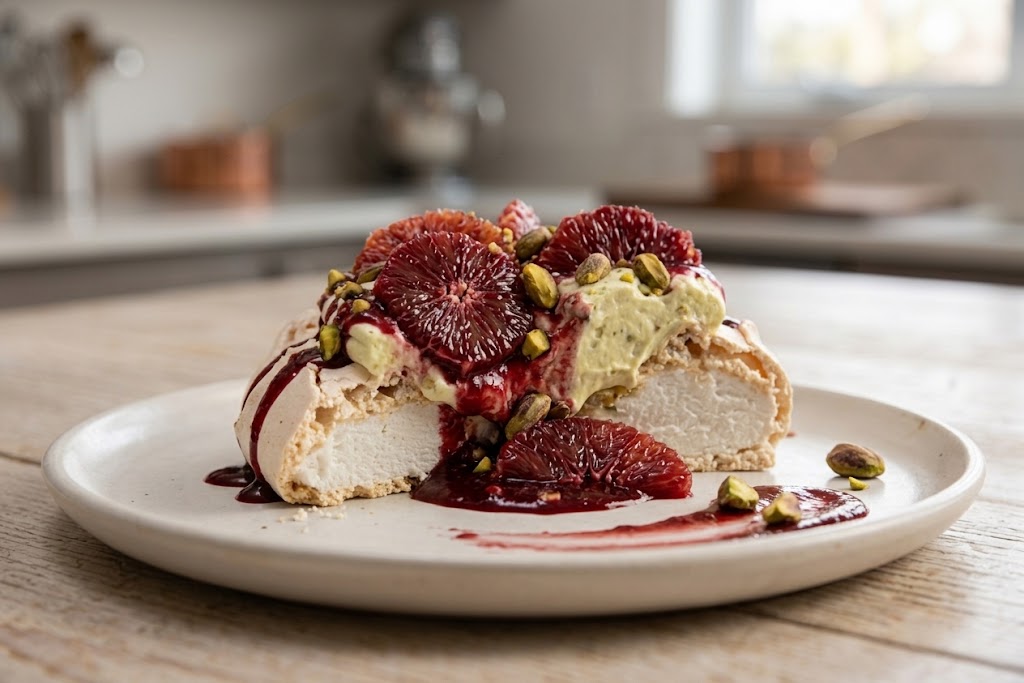
This James Martin pavlova recipe is a classic British dessert with a crisp, snowy shell and a soft, marshmallow centre, finished with clouds of whipped cream and fresh fruit. It tastes light and creamy with a bright, tangy contrast from berries and passion fruit. The technique is simple but needs a bit of patience, so I’d call it medium difficulty rather than hard. Set aside about 20 minutes prep time, then a long, gentle bake and cooling time for the best texture, around 3 hours total.
Ingredients
For the pavlova meringue
- 4 large egg whites, room temperature (about 120–140g)
- 225g caster sugar
- 1 tsp cornflour (cornstarch)
- 1 tsp white wine vinegar (or lemon juice)
- 1 tsp vanilla extract
- Pinch of fine salt
For the cream topping
- 300ml double cream (heavy cream), cold
- 1 to 2 tbsp icing sugar, to taste
- 1/2 tsp vanilla extract
For the fruit (and finishing)
- 250 to 300g mixed berries (strawberries, raspberries, blueberries)
- 1 to 2 passion fruits, halved (optional)
- Fresh mint leaves (optional)
How to Make James Martin Pavlova Recipe
Prepare the oven and tray
- Preheat the oven: Heat to 150°C (130°C fan). Place a shelf in the middle so the pavlova bakes evenly.
- Line your tray: Line a flat baking tray with baking parchment. Draw a 20cm circle on the parchment, then flip it over so the ink stays underneath.
- Prep your equipment: Make sure your mixing bowl and whisk are spotless and grease-free. Even a little fat can stop the egg whites from whipping properly.
Whip and stabilise the meringue
- Whisk the whites: Add the egg whites and a pinch of salt to your bowl. Whisk to stiff peaks so the mixture holds its shape when you lift the whisk.
- Add sugar slowly: With the mixer running, add the caster sugar 1 tablespoon at a time. Let each addition dissolve before adding the next. This takes a few minutes, but it’s what gives you that glossy, stable meringue.
- Check it’s ready: Rub a little meringue between your fingers. If it still feels gritty, whisk for another minute and check again.
- Finish the mix: Sprinkle over the cornflour, then add the vinegar and vanilla. Whisk briefly, just long enough to combine.
Shape and bake
- Shape the pavlova: Spoon the meringue onto the parchment inside the circle. Pile it fairly high, then use a spoon to create a shallow dip in the centre for the cream later.
- Start hot, then go low: Put the tray in the oven and immediately reduce the temperature to 120°C (100°C fan).
- Bake gently: Bake for 75 to 90 minutes. The pavlova should feel dry on the outside and lift cleanly from the parchment when it’s ready.
Cool completely (this matters)
- Turn the oven off: When baking time is up, switch the oven off and leave the pavlova inside.
- Let it cool slowly: Prop the oven door open slightly with a wooden spoon and leave the pavlova to cool completely in the oven. Slow cooling helps reduce cracking and weeping.
- Handle gently: Once cool, transfer to a serving plate. It’s normal for the top to have a few cracks. That is part of the charm.
Assemble and serve
- Whip the cream: Whip the double cream with icing sugar and vanilla to soft peaks. Keep it pillowy, not stiff, so it sits nicely on the pavlova.
- Top it: Spoon the cream into the centre and gently spread it outwards.
- Add fruit: Pile on the berries and spoon over passion fruit pulp, if using. Finish with mint for a fresh edge.
- Serve straight away: Pavlova is at its best soon after assembling, when the shell is still crisp.
Tips
Why did my pavlova crack?
A few cracks are normal, especially as it cools. Bigger cracks usually come from too high an oven temperature or cooling too quickly. Bake low and slow, then cool it completely in the switched-off oven with the door slightly open.
How do I get a soft, marshmallow centre?
Don’t overbake. You want the outside dry and set, not deeply coloured. The long bake at 120°C (100°C fan) followed by a slow cool gives you the crisp shell and a tender middle.
How can I stop pavlova from weeping or sweating?
Weeping is often caused by undissolved sugar or high humidity. Add the sugar gradually, whisk until glossy and smooth, and avoid making pavlova on very humid days if you can. Cornflour and vinegar help stabilise the meringue too.
Can I make the pavlova base ahead of time?
Yes. Bake and cool the meringue, then store it airtight at room temperature. Add cream and fruit just before serving so the shell stays crisp.
Serving Suggestions
- Serve with extra passion fruit and a little berry coulis on the side.
- Add lemon curd under the cream for a sharper, more citrusy finish.
- Swap berries for sliced peaches, mango, or roasted rhubarb when in season.
- Pair with coffee or a glass of chilled dessert wine for a more formal pudding.
Storage
Room Temperature
Store the plain pavlova base (no cream or fruit) in an airtight container at room temperature for up to 2 days. Keep it away from heat, steam, and sunlight.
Refrigerator
Once assembled with cream and fruit, pavlova is best eaten the same day. If you have leftovers, refrigerate in a covered container and eat within 24 hours. The shell will soften, but it will still taste lovely.
Freezing
You can freeze the baked, cooled pavlova base for up to 1 month. Wrap it carefully in cling film, then a layer of foil, and freeze flat. Defrost at room temperature in the wrapping, then unwrap and assemble just before serving. Do not freeze with cream and fruit.
Nutrition
- Calories: 320 kcal
- Carbohydrates: 44g
- Protein: 4g
- Fat: 14g
- Saturated Fat: 9g
- Sodium: 80mg
Nutrition values are estimates and will vary depending on exact ingredients, brands, and portion size.
FAQs
What temperature should I bake pavlova at for the best results?
For a stable pavlova with a crisp shell and soft centre, bake it low and slow. Start by heating the oven to 150°C (130°C fan), then reduce to 120°C (100°C fan) as soon as the pavlova goes in. This gentle heat dries the outside without browning it too much.
Can I make this James Martin pavlova recipe the day before?
Yes. Bake and cool the pavlova base, then store it airtight at room temperature overnight. Whip the cream and add fruit shortly before serving so the shell stays crisp.
Why is my pavlova chewy instead of crisp?
Chewiness can happen if the pavlova hasn’t dried enough, the oven was a little cool, or it was stored in a humid environment. Bake until the outside feels dry, cool it in the oven, and store the base airtight at room temperature.
Can I use frozen fruit on pavlova?
You can, but thaw it first and drain well. Frozen fruit releases a lot of juice, which can soften the meringue quickly. If you want the crispest texture, use fresh fruit or add thawed fruit at the last minute.
How do I know when the sugar is fully dissolved in the meringue?
The meringue should look thick and glossy. Rub a small pinch between your fingers. If you feel any grains, keep whisking for another minute and test again. Fully dissolved sugar helps prevent weeping and gives the best texture.
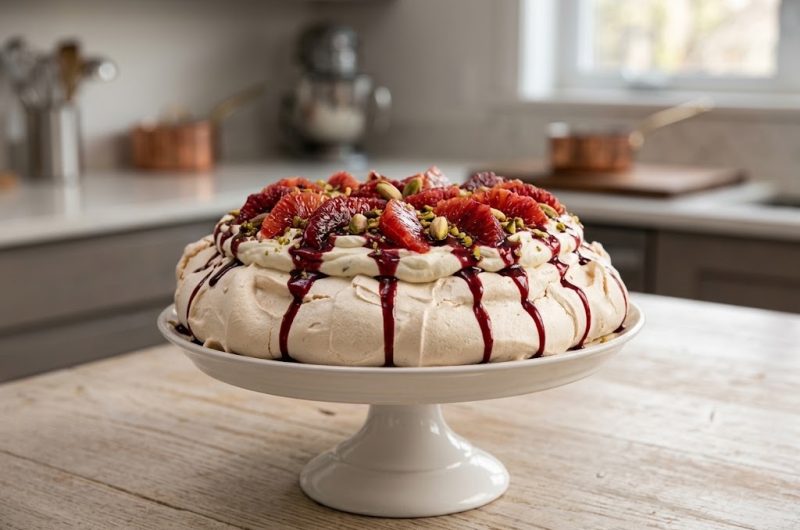
James Martin Pavlova Recipe
Course: DessertCuisine: BritishDifficulty: MediumServings
8
servingsPrep time
20
minutesCooking time
1
hour30
minutesTotal time
180
minutesCalories
320
kcal1
hour50
minutesA crisp-on-the-outside, soft-in-the-middle pavlova topped with vanilla whipped cream and fresh fruit. A show-stopping dessert that’s easier than it looks when you follow the low-and-slow bake.
Ingredients
- For the pavlova
4 large egg whites (about 120–140g), room temperature
225g caster sugar (superfine sugar)
1 tsp cornflour (cornstarch)
1 tsp white wine vinegar (or lemon juice)
1 tsp vanilla extract
Pinch of fine salt
- For the topping
300ml double cream (heavy cream), very cold
1–2 tbsp icing sugar, to taste
1/2 tsp vanilla extract
250–300g mixed berries (strawberries, raspberries, blueberries)
1–2 passion fruits (optional, but lovely)
Fresh mint leaves (optional)
Directions
- Heat oven to 150°C (130°C fan). Line a baking tray with parchment and draw a 20cm circle as a guide.
- Whisk egg whites with a pinch of salt to stiff peaks in a clean, grease-free bowl.
- Add caster sugar 1 tablespoon at a time, whisking well until the meringue is thick, glossy, and no longer feels gritty.
- Sprinkle over cornflour, add vinegar and vanilla, then whisk briefly just to combine.
- Spoon onto the tray, shape into a tall round, and make a shallow dip in the centre for the topping.
- Put in the oven, immediately reduce to 120°C (100°C fan), and bake for 75–90 minutes until dry to the touch.
- Turn the oven off, prop the door slightly open, and cool completely in the oven to reduce cracking.
- Whip double cream with icing sugar and vanilla to soft peaks.
- Top the pavlova with cream and fruit just before serving.
Notes
- Use a completely clean bowl and whisk. Any grease can stop the whites from whipping properly.
- For the best texture, let the pavlova cool fully in the switched-off oven.
- Assemble at the last minute to keep the shell crisp.