Subscribe For Weekly New Recipes!

James Martin Scrambled Eggs
These are rich, softly set scrambled eggs inspired by James Martin’s classic, buttery approach. The texture is creamy and luxurious, with delicate curds and a clean, savoury flavour that really shines on hot toast. It’s an easy recipe, but the timing matters, so I’ll walk you through it step by step. Total time is about 10 to 12 minutes from fridge to plate.
Ingredients
For the scrambled eggs
- 4 large eggs
- 40g unsalted butter, cold and cubed
- 2 tbsp crème fraîche (or double cream)
- Fine sea salt, to taste
- Freshly ground black pepper, to taste
- 2 tbsp snipped fresh chives (optional)
To serve
- 2 thick slices sourdough (or crusty bread)
- A little extra butter, for spreading
- Flaky salt, to finish (optional)
How to Make James Martin Scrambled Eggs
- Prepare the oven: Preheat the oven to 200°C or 180°C fan. If you like, pop two plates in the oven to warm while you cook the eggs. Warm plates make a real difference because scrambled eggs cool quickly.
- Toast the bread (your “baking” step): Place the sourdough on a baking tray and toast for 6 to 8 minutes, turning once, until crisp and golden. Keep it warm while you cook the eggs.
- Mix the eggs: Crack the eggs into a bowl and whisk just until the yolks and whites are combined. You do not need to whip lots of air in, just bring them together smoothly.
- Start cold for creamier curds: Tip the eggs into a cold non-stick frying pan and add the cold, cubed butter. Place the pan over low heat.
- Cook gently: Stir constantly with a silicone spatula, sweeping the base and edges of the pan so nothing sticks. As soon as you see soft curds forming, keep the heat low and be patient. If the eggs look like they are setting too fast, lift the pan off the heat for 10 to 20 seconds, then return.
- Stop the cooking (your “cooling” step): When the eggs are softly set and still glossy, take the pan off the heat and immediately fold in the crème fraîche. This cools the mixture slightly and keeps the texture creamy.
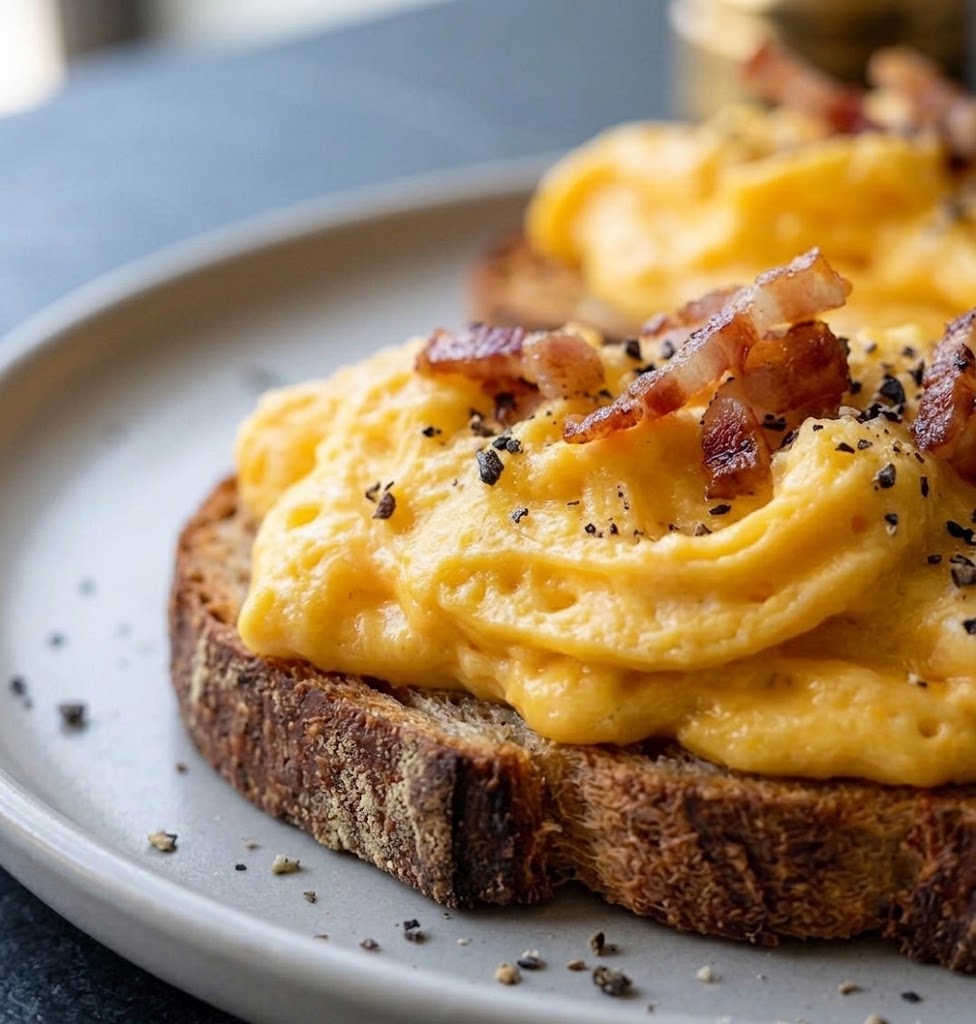
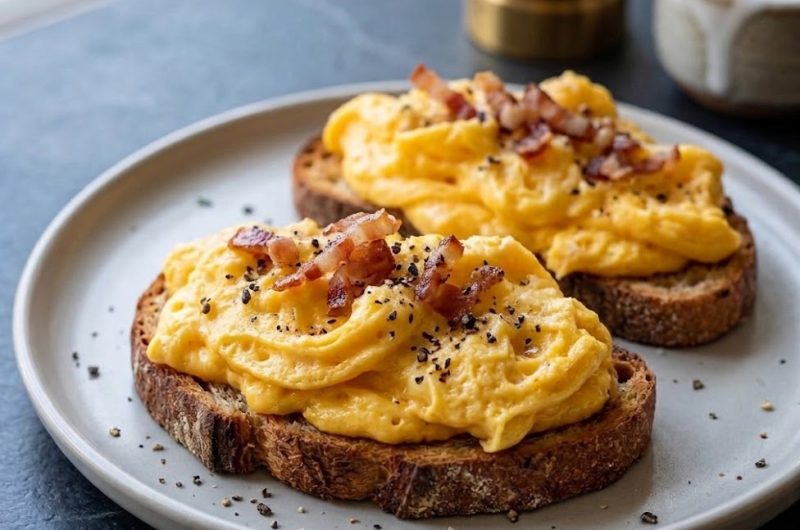
- Season and assemble: Season with salt and black pepper to taste. Butter the hot toast, spoon the scrambled eggs over the top, and finish with chives and a pinch of flaky salt if you like. Serve straight away.
Tips
Why are my scrambled eggs dry or rubbery?
That’s almost always heat related. Keep the heat low, stir constantly, and take the pan off the heat briefly if the eggs start to set too quickly. Remember the eggs will keep cooking from residual heat, so stop while they still look a little looser than you want.
When should I add salt for the best texture?
I prefer seasoning at the end. Salting early can sometimes tighten the proteins and make the eggs weep, especially if they sit for a minute before cooking. Finish with salt once the crème fraîche has gone in and you can taste properly.
How do I stop watery scrambled eggs?
Use gentle heat and avoid overcooking. Overcooked eggs squeeze out moisture and look watery on the plate. Also, if you’re adding extras like tomatoes or mushrooms, cook them first and drain off excess liquid before stirring into the eggs.
Can I make them even creamier without cream?
Yes. Increase the butter slightly (by 10g) and stir it in right at the end off the heat. You’ll still get a glossy, soft finish. A spoonful of cream cheese also works if that’s what you have.
Serving Suggestions
- Top with smoked salmon and a squeeze of lemon.
- Add sautéed spinach and a sprinkle of grated Parmesan.
- Serve with grilled tomatoes and crispy bacon for a brunch plate.
- Finish with chilli flakes or a dash of hot sauce for gentle heat.
Storage
Room temperature
Scrambled eggs are best eaten immediately. If they’re sitting out, keep it to a maximum of 1 hour (or 2 hours in a cool room) for both quality and food safety.
Refrigerator
Cool quickly, then store in an airtight container in the fridge for up to 2 days. Reheat gently in a non-stick pan over low heat with a small knob of butter, stirring until just warmed through. Microwaving works, but use low power in short bursts to avoid tough eggs.
Freezing
I do not recommend freezing scrambled eggs because the texture turns grainy as they thaw. If you must, freeze in a tight container for up to 1 month and thaw overnight in the fridge, then reheat very gently with a little butter to help bring back some creaminess.
Nutrition
- Calories: 507 kcal
- Carbohydrates: 24 g
- Protein: 18 g
- Fat: 37 g
- Saturated fat: 19 g
- Sodium: 550 mg
Disclaimer: Nutrition values are estimates and will vary depending on your bread, butter, and exact portion sizes.
FAQs
What makes James Martin scrambled eggs so creamy?
Gentle heat, plenty of butter, and finishing off the heat with crème fraîche (or cream). The crème fraîche stops the eggs cooking further and keeps the curds soft and glossy.
Do I start scrambled eggs in a cold pan or a hot pan?
For this style, start in a cold pan with cold butter, then cook over low heat. It gives you more control and helps create small, tender curds instead of big, dry chunks.
Can I make scrambled eggs without crème fraîche?
Yes. Use double cream, a knob of butter stirred in at the end, or even a spoonful of cream cheese. The key is adding it off the heat so the eggs stay soft.
How do I know when scrambled eggs are done?
Take them off the heat when they still look slightly loose and glossy. They will finish setting from residual heat, especially once you spoon them onto warm toast.
Can I scale this recipe up for more people?
You can, but for best results cook in batches. Overcrowding the pan makes it harder to control the heat, and the eggs can overcook before they turn creamy.
James Martin Scrambled Eggs
Course: BreakfastCuisine: BritishDifficulty: EasyServings
2
servingsPrep time
5
minutesCooking time
6
minutesTotal time
11
minutesCalories
507
kcal11
minutesCreamy, softly set scrambled eggs cooked gently with butter and finished with crème fraîche, served on crisp sourdough toast.
Ingredients
4 large eggs
40g unsalted butter, cold and cubed (plus extra for toast)
2 tbsp crème fraîche (or double cream)
2 tbsp snipped fresh chives (optional)
Fine sea salt, to taste
Freshly ground black pepper, to taste
2 thick slices sourdough (or crusty bread)
A drizzle of olive oil (optional, for toast)
Flaky salt, to finish (optional)
Directions
- Preheat the oven to 200°C (180°C fan) to toast the bread and warm plates if you like.
- Toast the sourdough on a tray for 6–8 minutes, turning once, until crisp and golden.
- Crack the eggs into a bowl and whisk just until the yolks and whites are combined.
- Add the eggs and cubed butter to a cold non-stick pan and place over low heat.
- Stir continuously with a silicone spatula, sweeping the base of the pan, until you have soft curds (about 3–5 minutes). Take the pan off the heat briefly if it starts to catch.
- Remove from the heat and fold in the crème fraîche to stop the cooking. Season with salt and pepper to taste.
- Butter the hot toast, spoon over the scrambled eggs, and finish with chives and a pinch of flaky salt if you like.
Notes
- Low heat is the secret. If the pan gets too hot, the eggs turn dry and grainy.
- Crème fraîche (or double cream) at the end keeps the eggs creamy and stops carryover cooking.
- Warm plates help keep scrambled eggs perfect for longer, especially if you’re serving more than one person.